Switch the website www.onsen.eu to PolishSwitch the website www.onsen.eu to GermanSwitch the website www.onsen.eu to English
Advice and order support: +48 512 999 218
0

Do you choose a mattress based on body weight?

10 marca 2026
choosing a mattress based on body weight, body weight and mattress choice, mattress firmness levels
When you walk into a typical mattress store, you almost always hear the same questions. The first is, of course, about your mattress budget, because that’s how salespeople maximise profit. The second is often the question about body weight. Using charts that date back to the era of spring mattresses, salespeople try to squeeze human biomechanics into weight brackets. This approach, embedded in the awareness of Polish consumers through decades of marketing, is one of the strangest myths in the sleep industry. It suggests that body weight is the only factor that determines how the body behaves on the mattress surface, which is simply a false assumption from the standpoint of physics and anatomy.

In reality, the user’s weight is a third-order parameter, and in many cases almost irrelevant. Unfortunately, for years the Polish mattress industry fed consumers a simple but physiologically wrong message: if you’re light, choose a soft mattress, which won’t really support you, and if you weigh more, sleep on a board, then struggle for years with back pain. This outdated mindset has led to a situation where millions of people sleep on unsuitable mattresses that are not aligned with human anatomy, suffering night after night. The scientific truth, which ONSEN® promotes boldly, is completely different and far more precise. As much as 97% of the adult population needs almost identical support, something you can call the golden middle.

From the perspective of sleep engineering and physics, the ideal mattress firmness for the vast majority of people is around 6.5 on a 10-point scale. In precise physical terms, that means about 120-125 newtons of firmness, which is easy to measure. This value provides an optimal balance between supporting the skeletal system and safely relieving pressure on soft tissues. Telling a petite woman to sleep on a soft sponge because she’s light is effectively sentencing her to sink into an unnatural position, which leads to lower back pain. On the other hand, forcing a person with obesity to sleep on hard concrete guarantees pressure, circulation issues, and discomfort.

As a rule, the spine has the same biomechanical requirements, regardless of whether the body around it weighs 50 kilograms or 100 kilograms. The key is the mattress’s functionality, including its ability to keep the body in a neutral position, rather than its passive resistance dependent on the user’s mass. That is why ONSEN® mattresses were designed around this universal insight. Instead of dividing people into weight categories, we created a best-in-class mattress that delivers ideal support dynamics.
mattress not by weight, consistent mattress firmness, even spinal support

Why should mattress firmness be consistent?

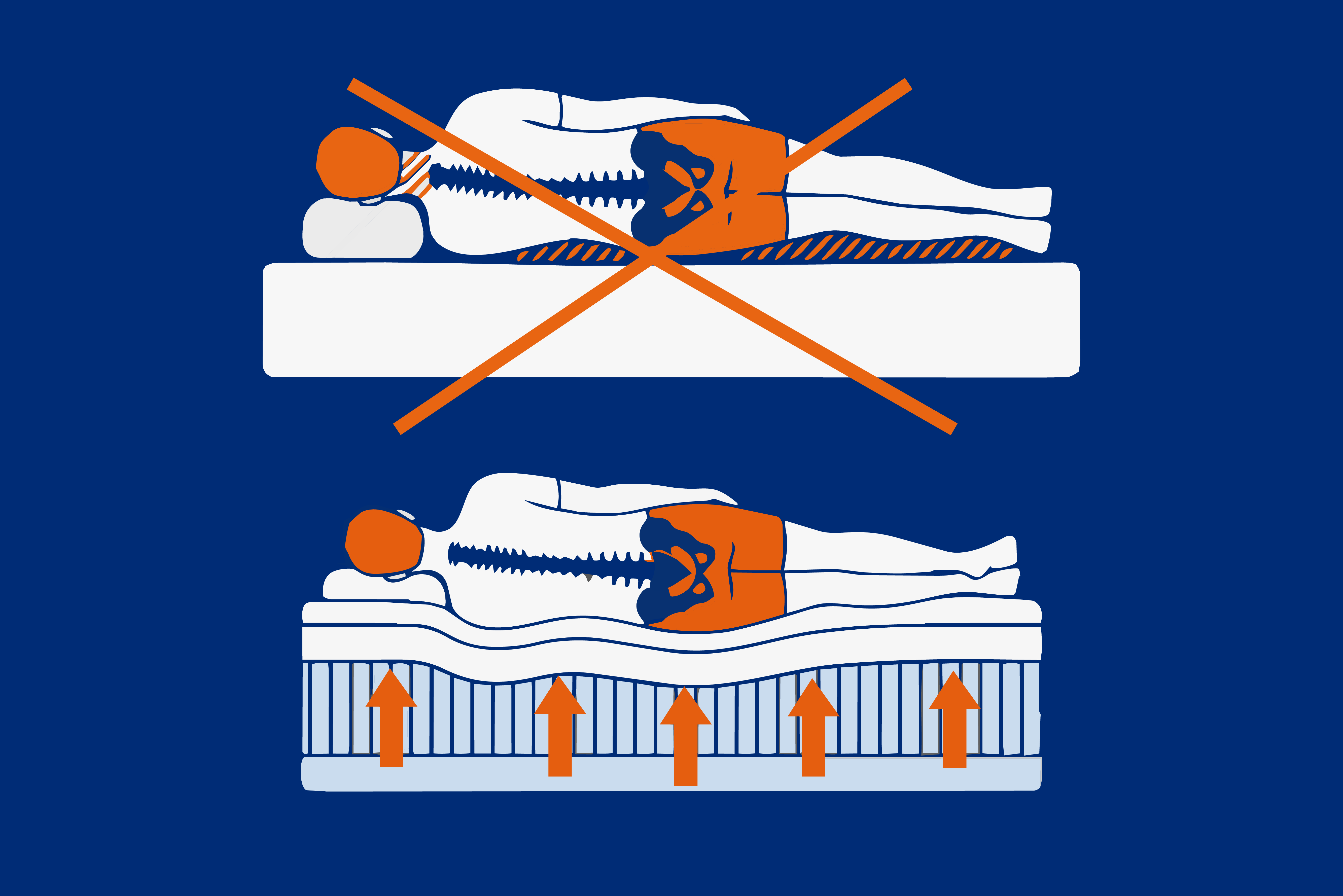
Why is a mattress firmness of around 120-125 N so crucial? The answer lies directly in the structure of the human spine, and also in how fascia works. For the body to regenerate, the spine has to maintain its natural curves, including the cervical and lumbar lordosis as well as the thoracic kyphosis, while the paraspinal muscles must fully relax. If your mattress is too soft, meaning it falls below the optimal range, your pelvis sinks too deeply, creating the hammock effect. The muscles then tense up to stabilise the skeleton. This happens regardless of whether someone weighs 45 kilograms or 90 kilograms, because the destructive mechanism is exactly the same.

On the other hand, exceeding this optimal mattress firmness means the mattress stops cooperating with the body’s curves. Pressure points, mainly the shoulders and hips, cannot sink in properly, which causes an unnatural spinal bend and also puts pressure on blood vessels. Many stories from orthopaedic patients start right here: with the purchase of a firm mattress recommended "for a healthy spine", which in reality worked like a torture device. A functional mattress, such as the flagship mattress from ONSEN®, eliminates these extremes. Thanks to high-resilience foams, every one of our mattresses provides stable support without bounce-back or excessive sink.

It’s worth emphasising that we’re talking about mattress firmness, expressed in newtons or kilopascals, not about foam density, which is a common misconception. Density and firmness are two different parameters, regardless of what some salespeople claim. The best mattresses on the market use modern materials that behave progressively. That means they may feel pleasantly elastic when you sit down, but in a lying position they generate the necessary buoyant force to keep the body properly aligned. It’s a technological masterpiece that makes ONSEN® mattresses outperform manufacturers relying on outdated H1-H4 firmness scales. It’s a solution that simply works for anyone looking for real support, not a marketing illusion.
side sleeping and mattress, hip support on a mattress, ergonomic spinal alignment

When do you need a firmer mattress?

Even though around 97% of the population will sleep perfectly on a mattress rated at 6.5/10, a truly evidence-based approach requires pointing out a small group of exceptions with different needs. These are young, highly athletic people with a lean build who also prefer sleeping on their stomach, even though it’s not the best sleeping position. In that position, physics is ruthless to the lumbar spine, because gravity pulls the lower back downward, which can deepen the lordosis. For this group, the standard mattress firmness may be slightly too little resistance.

In such cases, a firmer mattress by about 10-15% is recommended. Why? Because an athletic body has a different distribution of muscle tissue and a different level of joint stiffness. A young athlete sleeping on their stomach needs a shield that prevents the abdomen and pelvis from sinking, keeping the spine in a straight line like a taut string. That does not mean going back to sleeping on the floor, and certainly not to hard spring mattresses with coconut layers. It is only about a subtle adjustment of the base firmness, which still has to stay within a comfort range.

Remember that ordinary T foam, even in a firmer version, will simply feel uncomfortable. The solutions used by ONSEN® in the best mattresses are designed so that even with higher firmness - and, where needed, with the right top layers - they do not restrict blood flow. That highlights the brand’s advantage: firmer does not have to mean crude. Proper selection is key if you want to avoid waking up with lower back pain. For everyone else, however, the universal 6.5/10 is practically the holy grail of ergonomics and is hard to challenge.
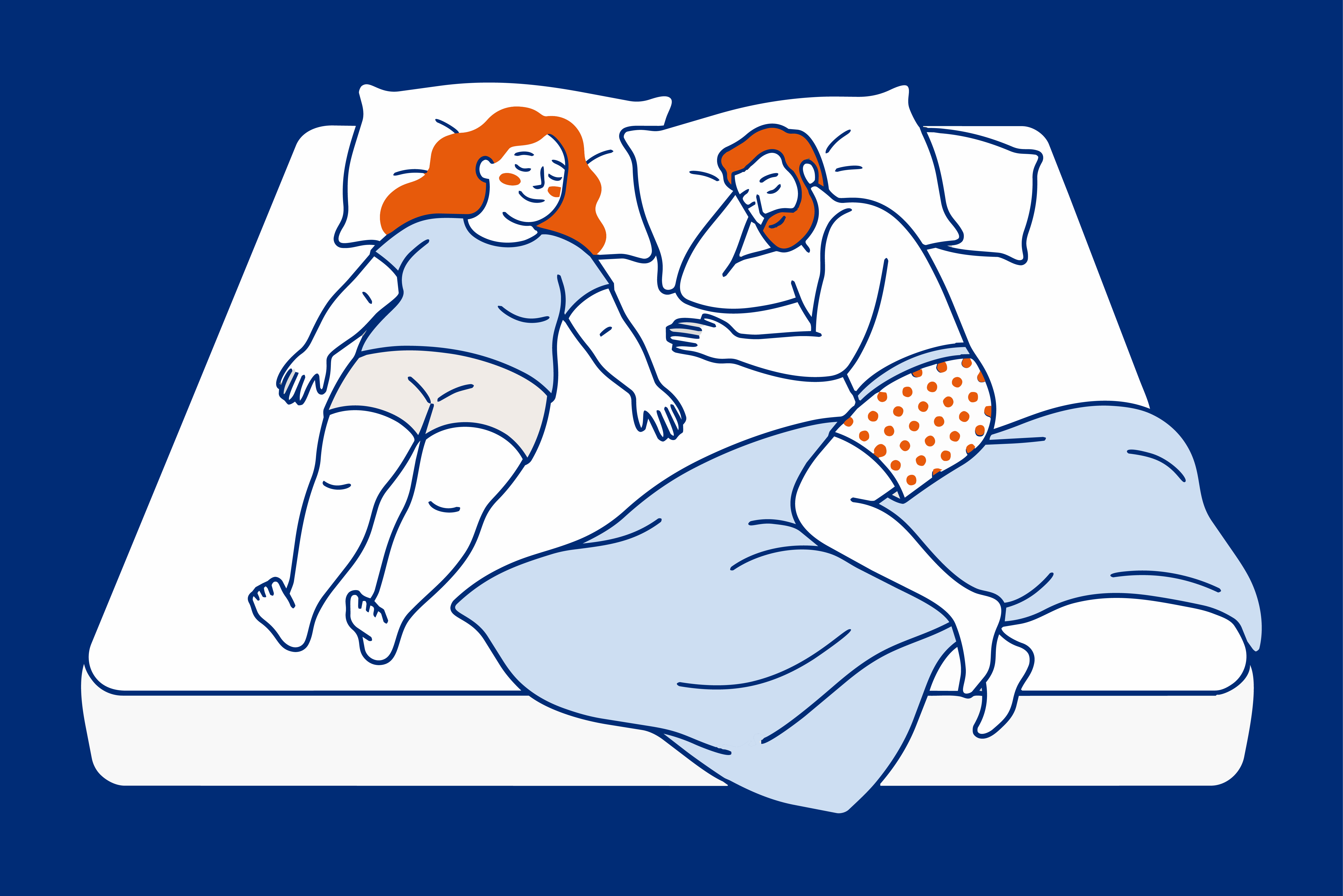
mattress for couples, one firmness for two, body support regardless of weight

Enough with the weight dictate - it’s time for the quality dictate!

Why do we still see "weight vs firmness" charts in so many mattress stores? Because they’re easy to sell. It’s simply easier to sell a customer the illusion of choice than to educate them on physiology. ONSEN® chose the harder path - but the only right one: education and no-compromise quality. Our mattresses prove that one perfectly engineered product can be the best choice for a wide range of users. That’s not magic - it’s pure physics and top-tier materials engineering.

When you choose an ONSEN® mattress, you’re choosing best of the best. These are mattresses that don’t ask about your weight - they respond to your body. The high-resilience foams used inside feature an open-cell structure and long lifespan that outperform traditional solutions. Thanks to that, the mattress keeps its parameters for years, not just for the first few months of use. It’s a health investment that pays you back every night in the form of deep, uninterrupted sleep.

Don’t let anyone convince you that weight determines mattress firmness, because there’s no logical basis for it. Regardless of body build, your spine needs the same thing: stable support around 6.5/10. ONSEN® understands this, which is why it creates the best mattresses on the market, putting an end to the era of uncomfortable compromises. Choose knowledge and ergonomics, and trust a Polish brand that has changed the rules of the bedroom game.

We also encourage you to explore other articles on the best sleep and health blog, as well as the Encyclopedia of Healthy Sleep prepared by the ONSEN® team of specialists. For those who care about spine health, we recommend a set of spine exercises prepared by our physiotherapist.

FAQ: Choosing a mattress based on body weight

Do you choose a mattress based on weight?

In general, no. Weight should not be the deciding factor when choosing a mattress. It matters, but only secondarily. What matters most is whether the mattress keeps the spine in a neutral position and provides stable support without a hammock effect (sinking in). A mattress that is too soft can worsen spinal alignment and increase muscle tension, while a mattress that is too firm can create pressure around the shoulders and hips.

How do you match mattress thickness to weight?

You don?t match mattress thickness to weight. Mattress height (thickness) mainly comes down to the specific model?s construction and overall comfort. In practice, the most commonly chosen mattresses are around 20 to 25 cm tall, because they fit most beds easily and allow the layers to work properly.

Which mattress should you buy at 50 kg

At 50 kg, choose a mattress that provides stable, predictable support and isn?t excessively soft. The myth "light person equals soft mattress" often ends with the pelvis sinking and the spine settling into an unnatural position. The best option is a point-elastic mattress that compresses locally and keeps the body evenly supported along its full length, such as Osaka Air or Osaka Grid.

Which mattress is good at 70 kg?

At 70 kg, a mattress that balances stability with contouring works best. The right mattress cannot be too soft (or you get the hammock effect) and cannot be too firm (or pressure increases). The best choice is a true middle-ground mattress that keeps the spine neutral, supports the hips well, and relieves pressure at the shoulders.

Which mattress is suitable for someone who weighs 60 kg?

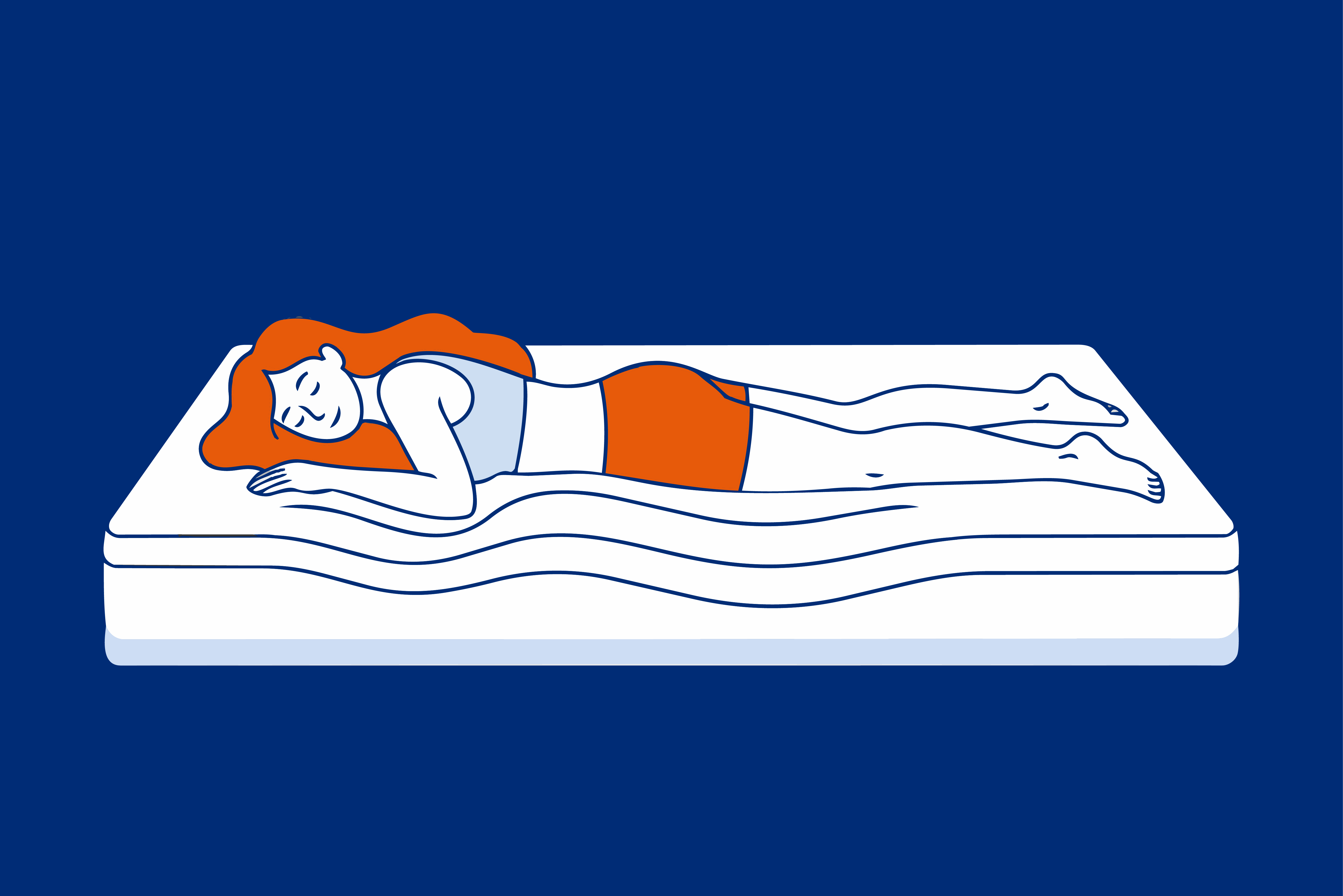
At 60 kg, the key is matching the mattress to your body shape and sleeping position, not the number on the scale. Look for a mattress that keeps the spine neutral, has point elasticity, and doesn?t allow the hips to sink. If you sleep on your side, good contouring at the shoulder and hip is important. If you sleep on your back, stable lumbar support is the priority.

Share
Newsletter - stay up to date!
Without your consent, we cannot add your e-mail address to the ONSEN® newsletter subscriber base.
Thank you for joining the ONSEN® newsletter subscriber group!
Comments
There were errors in the form.
First name or nickname *
E-mail address (will not be visible)
Telephone number (will not be visible)
Comment *
Thank you for adding a comment!
Learn more about how to choose the best mattress...

ONSEN® is a Polish manufacturer of mattresses, orthopedic pillows, bedding, and ergonomic furniture.